
Make the carton
after the order arrives
YS equipment turns order dimensions into cutting and creasing instructions for multi-SKU and variable-size operations. Selection must cover board, stations, box styles, floor space and line rhythm, with the full packing workflow.
The machine manages variable-order box making, not only carton cutting
After receiving or reading size data, the equipment cuts, creases and slots a matched corrugated material to create the carton blank for that order. This reduces manual box searching, box modification and dependence on many low-frequency finished-carton formats.
Selection starting point: size distribution, peak orders and board combinations come before published PCS/min.
Four operating profiles, four configuration starting points
Use these routes to narrow the range, then validate the machine, board and box rules together.
Model information and project confirmation
Original model sheets are available below for reference. Confirm the current supplied version, configuration and operating conditions for the project.
| Model | Available information | Confirm for your project |
|---|---|---|
| YS-120 | Original sheet and the YS-120 application video | Supplied version, configuration and operating conditions |
| YS-MS180 | Original model sheet | Supplied version, configuration and operating conditions |
| YS-MS280 | Original model sheet | Supplied version, configuration and operating conditions |
| YS-350 | Original model sheet; also named YS-MS350 | Supplied version, configuration and operating conditions |
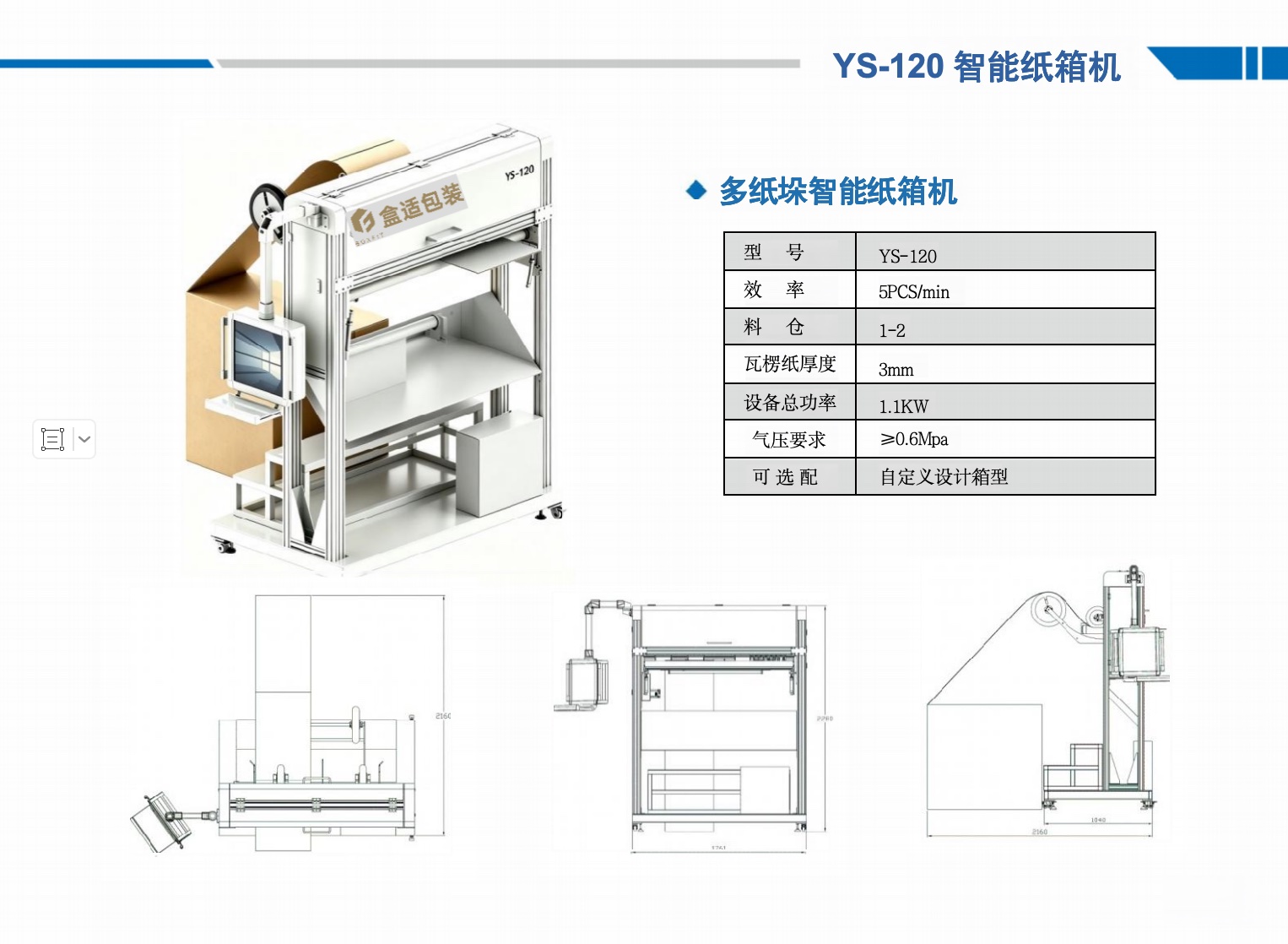
YS-120 Smart Carton Machine
In the original model brochure, One or two board stations support initial on-demand carton assessment in a compact workspace. The original sheet lists an output of 5 PCS/min and 3 mm corrugated thickness.
Original brochure specifications
- Output
- 5 PCS/min
- Stations
- 1–2
- Total power
- 1.1 kW
- Air
- ≥0.6 MPa
Option: custom carton style design
Assess YS-120 fit ->Produce the right carton blank on demand and connect it directly to the packing station
For long products with changing dimensions, the YS-120 produces a scored and slotted carton blank from order requirements. At the adjacent workstation, operators add protective material and follow the prepared structure to fold, load and close the carton, keeping box making and packing closely connected.
- Produce carton blanks on demand for changing long-product dimensions
- Use prepared scores and slots to simplify downstream folding and assembly
- Connect machine output with the manual packing station in one clear workflow
The final solution is configured around product dimensions, protection requirements, order rhythm, board specifications and site layout.
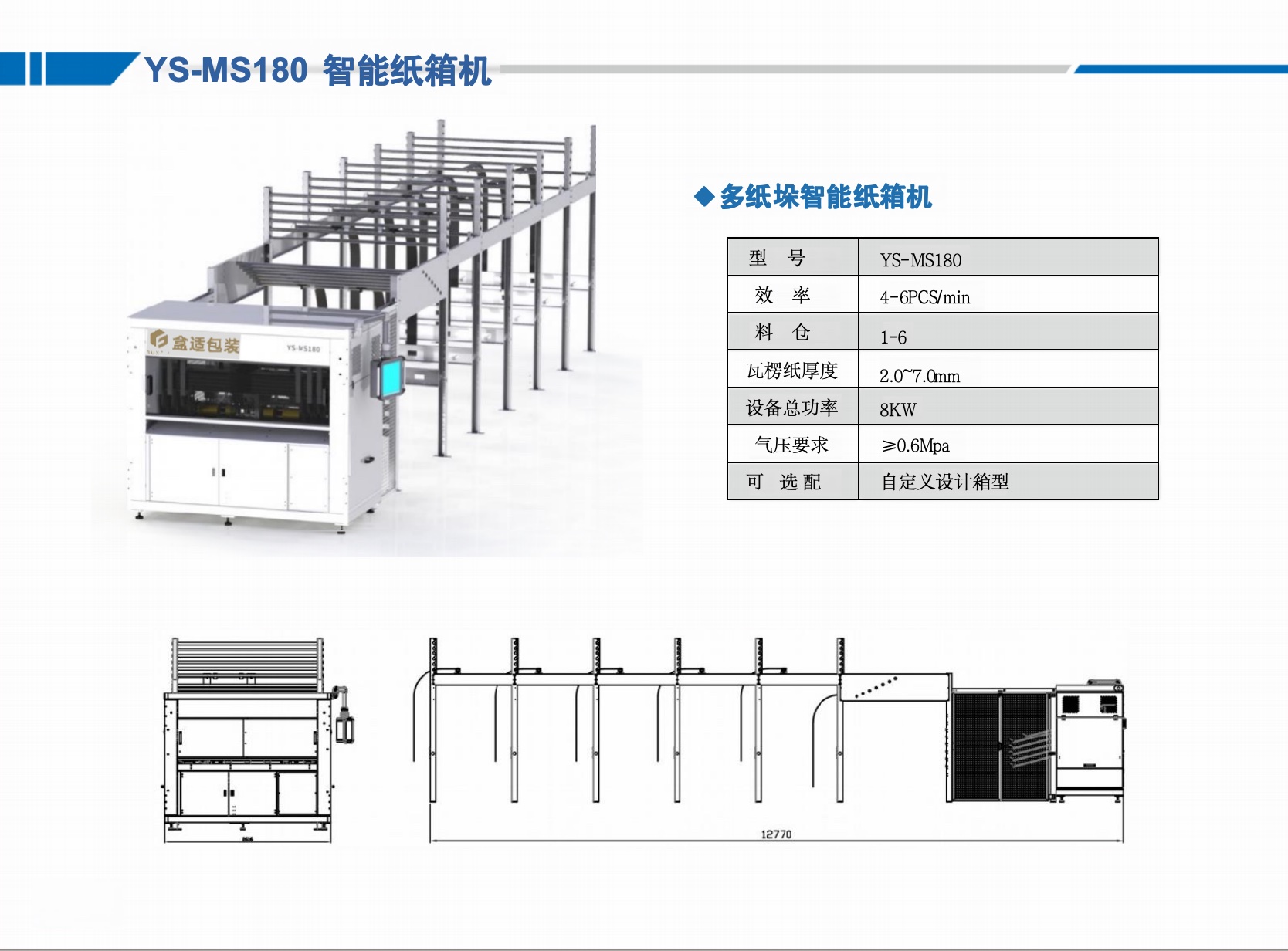
YS-MS180 Smart Carton Machine
In the original model brochure, One to six board stations leave room for multiple board configurations and frequent order-size changes. The original sheet lists an output of 4–6 PCS/min.
Original brochure specifications
- Output
- 4–6 PCS/min
- Stations
- 1–6
- Board thickness
- 2.0–7.0 mm
- Total power
- 8 kW
Air: ≥0.6 MPa · Custom carton style design available
Assess YS-MS180 fit ->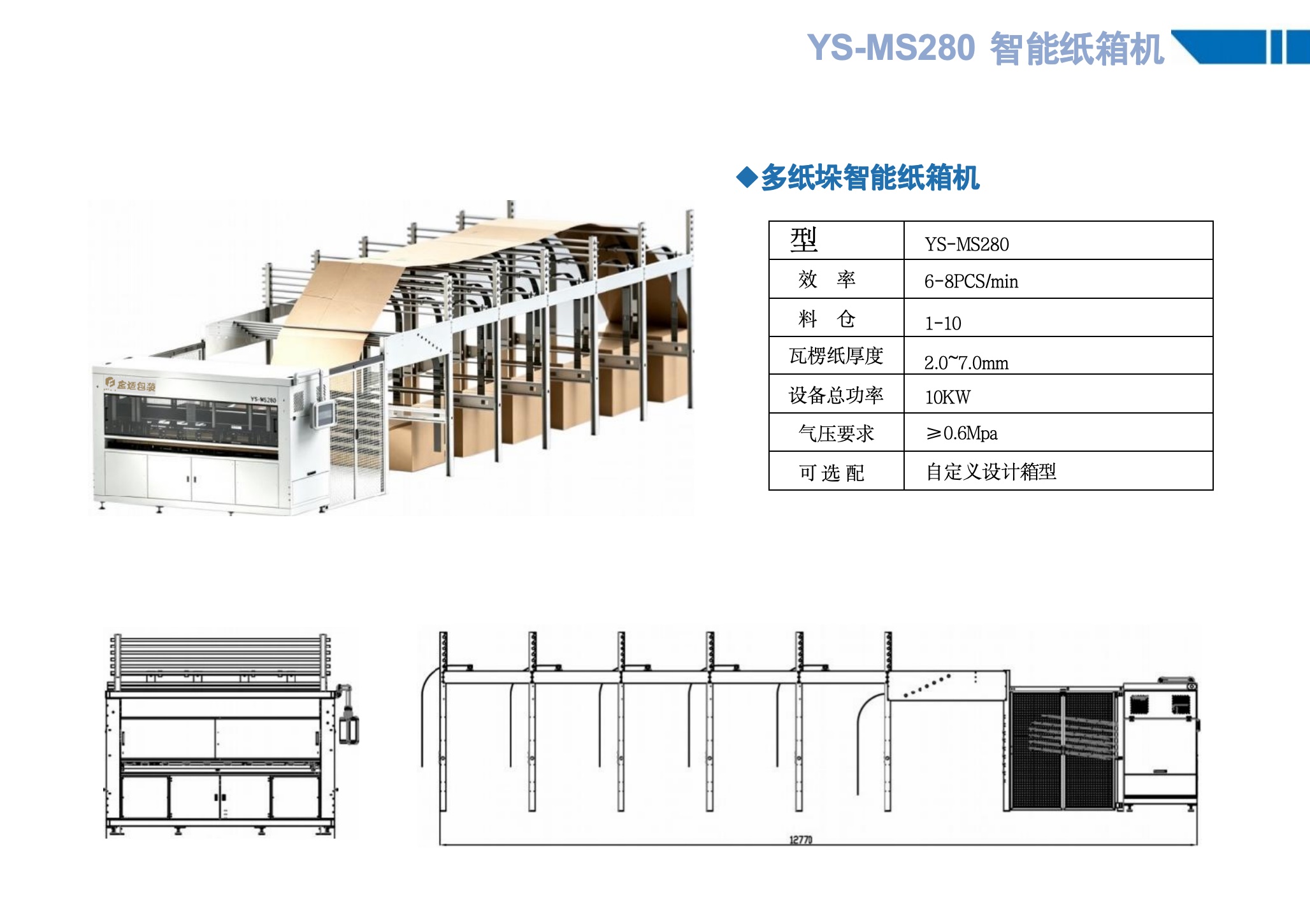
YS-MS280 Smart Carton Machine
In the original model brochure, The published configuration covers one to ten board stations for broader material combinations and higher operating demand. The original sheet lists an output of 6–8 PCS/min.
Original brochure specifications
- Output
- 6–8 PCS/min
- Stations
- 1–10
- Board thickness
- 2.0–7.0 mm
- Total power
- 10 kW
Air: ≥0.6 MPa · Custom carton style design available
Assess YS-MS280 fit ->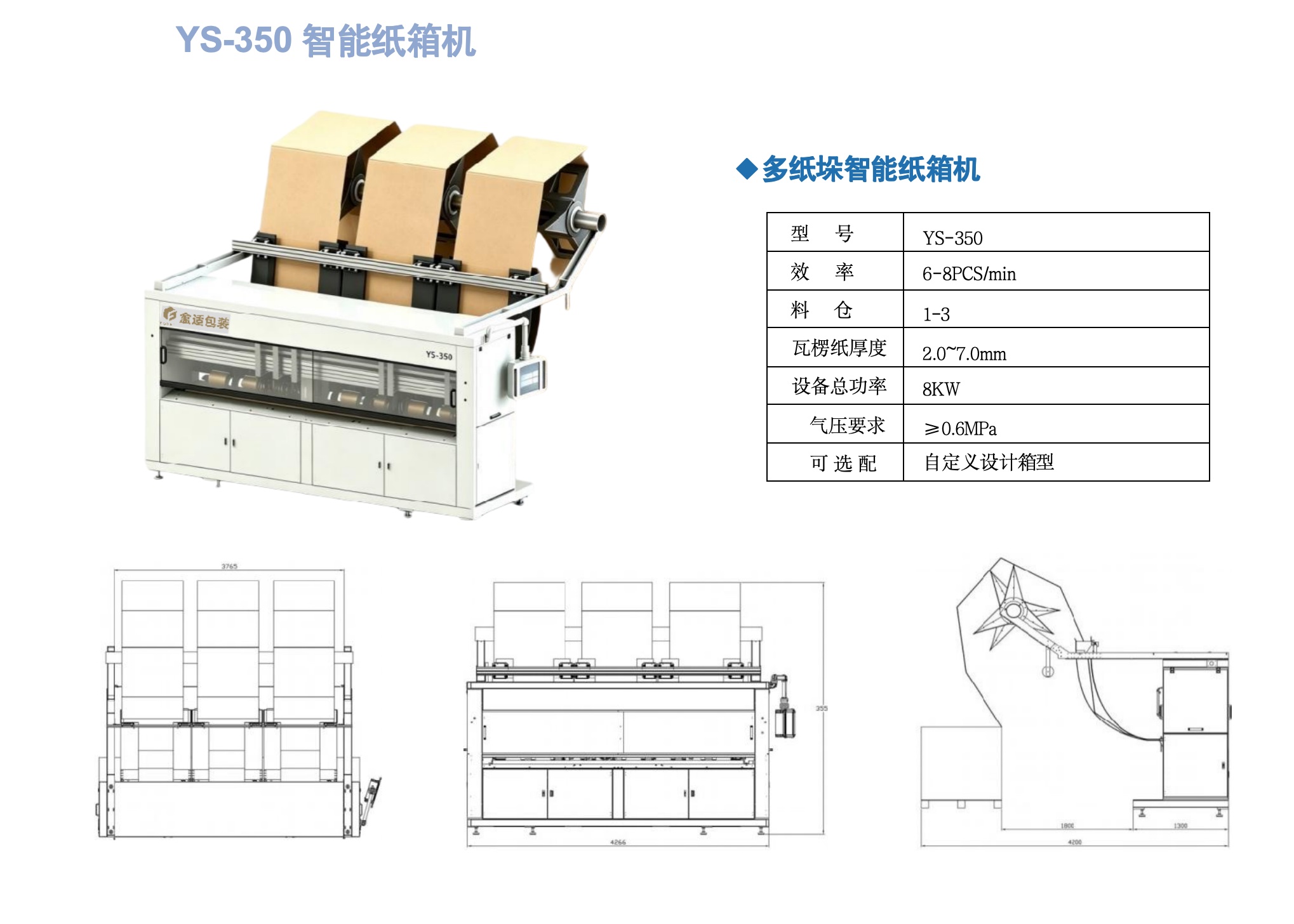
YS-350 Smart Carton Machine
In the original model brochure, The three-station structure and published output of 6–8 PCS/min provide another higher-output direction to assess against board mix, floor space and peak orders.
Original brochure specifications
- Output
- 6–8 PCS/min
- Stations
- 1–3
- Board thickness
- 2.0–7.0 mm
- Total power
- 8 kW
Air: ≥0.6 MPa · Custom carton style design available
YS-350 and YS-MS350 are two names for the same model.
Assess YS-350 fit ->When frame dimensions change by order, the machine creates the matching carton blank first
The on-site footage shows the YS-350 producing a carton blank before operators fold, load, protect, close and transfer the framed product at adjacent workstations. The value depends on how the machine fits the packing method and order rhythm, with the full packing workflow.
- Cover large formats and changing frame aspect ratios
- Place carton making close to the actual packing work
- Assess board, corners, surface protection and closing together
The machine and packing stations work together. Order mix and station layout guide capacity and staffing planning.
Stable fanfold feeding is part of equipment selection
The model is only the starting point. Peak orders, size-change frequency, fanfold specifications and line interfaces determine the final configuration. The video shows actual fanfold feeding.
- Check practical output against the order and size mix.
- Reserve interfaces for ERP, MES, scanning and conveyors.
- Confirm the final configuration through project assessment.
Six data groups are needed before quotation and configuration
These inputs directly affect machine model, stations, board and interface planning.
- Products and boxesRepresentative L-W-H, weight, box styles and protection
- Order rhythmAverage, peak, hourly peak and size-change frequency
- Board conditionsWidth, thickness, flute, stations and supply format
- Workstation layoutAvailable dimensions, operator flow and buffer space
- System interfacesERP, MES, scanning, conveyors and closing
- Delivery conditionsFactory location, timing, installation, training and support
On-demand box machine selection questions
How should an on-demand box making machine be selected?
Start with product dimensions, peak orders, board thickness, stations, box styles, floor space and line interfaces. Use published specifications for screening and validate with project data.
How should the original brochure specifications be read?
The model sheets reproduce original brochure information. Confirm the current supplied version, configuration and operating conditions for your project.
Does the equipment require fanfold board?
Material configuration must be checked for the model and project. Board width, thickness, flute and station arrangement need to match machine capability.
Can it connect to ERP, MES or conveyors?
Interfaces can be assessed during the project. Data format, triggers, exception handling and upstream or downstream rhythm must be confirmed before final configuration.